Tuesday, August 11, 2015

Food, glorious food!

There are SO many books about food.  Really.  We made a whole program series called Cooking with Kids because of that fact (also because I like to cook and I thought it would be a good idea - there will be upcoming blog posts about this).  I'll try to keep it to the ones that we actually use for our food-themed story time.

Eat Your Peas by Kes Gray.  The tale of a mom who offers her kid more and more outlandish things in a desperate attempt to get her to eat her peas, to which she replies "I don't like peas".  I get the kids to do that part when I read the book - and by the end when I'm going through this mile-long list of all the things Daisy would get if she'd eat the peas, they're screaming "I don't like peas".  It's great.

Gladys Goes out to Lunch by Derek Anderson.  A gorilla smells something AMAZING, so rather than having boring old bananas, she goes out.  She tries pizza, French food, and ice cream, but none of it is what she wants til she goes back to the zoo and finds it at a food cart.  Honestly?  I've never seen this at a food cart, but ok.


I Will Never Not Ever Eat a Tomato by Lauren Child.  Lola is a fussy eater, and Charlie has to feed her, so he tricks her by telling her all the foods she refuses to eat are really these other things.  The book is long, and I sometimes wonder if my young kids really get it, but I love the book, and they do well listening to it as long as I ask them questions.


Gator Gumbo by Candace Fleming.  I love this book, but my coworker refuses to do it because she can't do a Cajun accent, lol.  It's a twisted take on the Little Red Hen, and I would definitely recommend it more for elementary age children.


Stone Soup by Heather Forest.  There are many authors who have done versions of this story, I just like the illustrations in this one.  We tend to do this as an interactive story, where all (or a lot of) the children get some sort of vegetable they can come up and throw in the pot when we get to it in the story.


Today is Monday by Eric Carle.  While this is a fantastic book, we actually don't use it during this story time.  Rather, we have developed a song based on the book.  We pull out a whiteboard, write out the days of the week with spaces next to them, and then ask the children what their favorite foods are.  Then we do it like the book.  Ex:

Monday: Chicken nuggets
Tuesday: Hot dogs
Wednesday: Carrots

Today is Monday. Monday, Chicken nuggets.  All you hungry children, come and eat it up.

Today is Tuesday. Tuesday, Hot dogs. Monday, Chicken nuggets. All you hungry children, come and eat it up.

Today is Wednesday. Wednesday, Carrots. Tuesday, Hot dogs. Monday, Chicken nuggets. All you hungry children, come and eat it up.


And finally, I *do* have a fingerplay I do with this theme.

5 Fat Sausages
(place one hand on top of the other and wiggle fingers to "sizzle")

5 fat sausages sizzling in the pan, 1 got hot and it went BAM! (clap)
4 fat sausages sizzling in the pan, 1 got hot and it went BAM! (clap)
3 fat sausages sizzling in the pan, 1 got hot and it went BAM! (clap)
2 fat sausages sizzling in the pan, 1 got hot and it went BAM! (clap)
1 fat sausages sizzling in the pan, it got hot and it went BAM! (clap)
No fat sausages sizzling in the pan.

Tinkerlab

This summer, we decided to try something a little different.  For the past 4+ years, we had been doing some kind of variation on story and a craft or budding artists.  It was an hour long craft program for ages 8 & up (or 5 & up after we lowered it).  In fact, you can read a bit about it in this post.  However we still had people who insisted on bringing younger children to the program.  At first we countered that by having an alternate craft for them.  Then, we turned it into story and a craft, where we read a story and then did simpler crafts.  At least I thought they were simpler - and for the most part they were, until last year during the science themed summer when we got to optical illusions and I saw children having meltdowns because they weren't getting it "right".  That was way too much stress for what was supposed to just be a fun art class.  So I started looking around.

The first thing I found was this:  Art Lab for Little Kids: 52 Playful Projects for Preschoolers by Susan Schwake.  Awesome, right?  Actually, yes - it is.  However, it was still a little too structured for my tastes.  Side note:  you should check out the other books in this series.  I ordered this one, the painting one, and the drawing one for my library and I think they are SO cool.

I started clicking through the list on the bottom - you know the "other users bought" list, and I found this book: Tinkerlab: A Hands-On Guide for Little Inventors by Rachelle Doorley.  Hmmmm.  Sounds interesting.  So I click on the look inside and read for awhile and I love it!  This mom (who is also an artist and arts educator) started a blog called Tinkerlab that got turned into a book, and it's all about letting kids be as creative as possible - giving them the supplies to do their own projects, and the freedom to make them.  She has guides on showing children how certain new materials can be used, but that freedom of creativity really stuck with me.  (Yes, I ordered the book for my library).

Inspired, I thought "I can do that"!  So rather than do led projects this year, we did our own version of Tinkerlab.  We set out supplies every week, and the children could just come and make *whatever* they wanted.  We had a jar full of ideas and some pattern and color dice in case they needed a nudge, but in the 10 weeks and 20 programs we did?  They were used maybe twice.  Different supplies were set out the initial 6 weeks of our main summer programming, and boy - did things get interesting.  I learned never to trust a group of children with glue guns.  While they can certainly learn not to touch it themselves, they have almost no awareness outside of themselves, and there were a few close-calls.  We had a core group of supplies that were always on hand (glue, scissors, paper, crayons, markers), but here's the 6 weeks (plus the only one we did later that had a theme):

1.Sensory - kinetic sand, water beads, beans.  Mostly this was in case there were really small children who showed up and it was a chance for kids to play.  Once set listened really well about not mixing the water beads and beans.  One did not. :/

2.Ooh Shiny - feathers, sequins, rhinestones, pom-poms, felt, and ribbons.  The children really enjoyed this one - especially the girly-girls.

3. Beads - we have SO many beads stocked up, I haven't bought any in years.  We needed to get rid of some and this was the best way to do it.  It barely put a dent in our stock.

4.Old Tech - audio cassettes, microfilm, DVD cases, computer keys, floppy disks.  This was the glue gun week.  It was cute b/c they wanted to make their own "computers".  I had to show them the tape inside the cassettes.  A couple got creative with it - most just wanted to pull it out and cut it up.

5. Paper Goods - mat board cutouts, wrapping paper, tissue paper, coffee filters, confetti, scrap paper. We had lots of leftover cutouts from our die-cut machine and inexplicable wrapping paper from the 80s.  This helped get rid of that.  Unfortunately it generated a LOT of scrap paper.  Later in the summer, I restricted them to 1 whole sheet of paper per project and forced them to use scraps for anything else they needed.

6.  Mixed bag - we put anything and everything out.

7.  Food - beans (black, pinto, lentils, split peas [yellow and green]), barley, dyed rice, cinnamon sticks, dried peppers, pasta (macaroni, shells, farfalle, ditalini, linguini).  It can be controversial, and Rachel addresses that in her book and on her blog, but really?  It's just an awful mess.  Everyone really loved that week though, and one of the 10 habits of Tinkerlab is "Embrace a Good Mess".  *sigh*

The biggest stress of this program was setting up the room every week - and even that wasn't that bad.  It can get a little expensive, but if you stick to construction paper and the basics, it doesn't have to be.  Ask people for donations.  Or you know what?  They'll hear about your program and just start giving them to you anyway.  Have fun!


HALLOWEEN!!!!

Just saying the word Halloween makes me a little giddy! :)  Other people may not agree with our idea, but our Halloween story time basically became our monster theme.

Go Away, Big Green Monster by Ed Emberley.  I mean, COME ON.  Could you really do monsters without doing this book?  It's the best!  So much interaction with the kids, it's ridiculous.  I love it.


Over in the Hollow by Rebecca Dickinson. So you covered colors with Green Monster, now you can do numbers!  And sing!  And make scary noises! You know the old song Over in the Meadow, well just apply it to this.  But it has mummies, vampires, spiders, and werewolves.  I love it!


Trick or Treat Countdown by Patricia Hubbard.  Ok, another counting book - I know.  This one you don't have to sing, and it's not as long.  You can still make all sorts of scary sounds and motions.  I especially love the fact that it emphasizes that all the things it mentions - skeletons, witches, werewolves, etc. are all make-believe on Halloween.  You'll love it - just be creative!


The Three Bears' Halloween by Kathy Duval.  Whenever I do one of Kathy Duval's new 3 Bears stories, I always review the classic one with the kids first.  Sometimes - as with the Christmas one - it tricks some of them into believing it's Goldilocks the whole time.  Other times, it doesn't work, and they insist it's a witch the whole time - like with this one.  It's the same formula as the classic, just updated for a different holiday.  


My Beastly Brother by Laura Leuck.  Pretty much just a book about how brothers are, but with monsters.  The kid goes through all the ways his brother tortures him, but he's really there when it matters most.  It mentions underwear, so of course kids giggle at that.


Crankenstein by Samantha Berger. While *teeeechnically* not a monster book, we still used this one this past year.  Working with kids, we ALL know a Crankenstein when we see one, and this made the parents laugh as much as the children.  The children enjoyed making the "Meeerrrgh" noises more.  I have to say, now that I've been doing this for 5 years, I'm identifying favorite authors/illustrators more, and Dan Santat is def. one of them!


Vampirina Ballerina by Anne Marie Pace and Zombelina by Kristyn Crow.  Look at how cute these are!!! I think I ordered these after Halloween last year, so I didn't get to use them, and they're probably too long for preschool, but elementary age might enjoy them.  They make the little goth part of my heart smile.


The Hallo-wiener by Dav Pilkey.  Not really a monster book, but we do it at Halloween, so it needs to be mentioned.  It's too long for me to use with my younger children, but the elementary age loves it.  Of course, it's about a dog who gets picked on, but in the end, it's the very reason he gets picked on that saves everyone.  Who doesn't love Dav Pilkey?


Where's My Shoggoth? by Ian Thomas.  If you're a fan of the Old Ones, this is the book for you.  I can't say that I'd EVER use it in story time, but it is one heck of a cool book!  It features a lot of Lovecraft's creatures in these fantastic illustrations by Adam Bolton and the rhymes in it are great!


Wow!  SO many monster/Halloween books, and I'm sure I could name TONS more.  Seriously.  Favorite holiday!  I don't really do a fingerplay or song with this one (other than my regular opener and get-up-and-move in the middle).  A several of the books are so interactive, I don't really feel as pressured to do so.  HOWEVER, if you *really* want one, there's always 5 Little Pumpkins.

Five little pumpkins sitting on a gate
The first one said, "Oh my, it's getting late!"
The second one said, "There are witches in the air!"
The third one said, "But we don't care!"
The fourth one said, "Let's run and run and run"
The fifth one said, "Isn't Halloween fun?"
Then Ooooooooh went the wind 
And out went the lights 
And five little pumpkins rolled out of sight.

Pumpkins

As I said in my last post, I know everyone is not into Halloween as much as I am.  (I have no idea why).  That said, we *try* not to mention Halloween *too* much in our pumpkin theme.  I think most of the parents stay away anyway just to be safe, but still - we try.

Pumpkin Circle by George Levenson. This is a book we just added to our repertoire this past year.  And if you're saying, "But wait, I've read that, and I know it mentions Halloween".  Yes, but only at the end of the book, and we just don't read that part.  Honestly?  It's knowing who your audience is and what you can and can't get away with.  This book has good facts about the different types of pumpkins and how they're grown, and a few traditions around the United States - like the pumpkin boat races.


Plumply, Dumply Pumpkin by Mary Serfozo. This cute little story features a tiger picking out juuust the right pumpkin.  For what?  Pickling?  Pie?  Nope, a jack-o-lantern.  It can be quite a tongue-twister at times, but a fun read.


The Little Old Lady Who Was Not Afraid of Anything by Linda Williams.  Totally a classic, right?  The kids have so much fun doing all the motions that go with the story.  And I try to go a little faster when I do them, so by the time she gets to her house, we're going really fast (because she's running, of course).


The Runaway Pumpkin by Kevin Lewis.  To me?  Another classic.  I've read it so many times, but it's a coin-flip as to whether I read it for pumpkins or Halloween - it just depends on who is there.  This one can also be quite the tongue-twister, but the kids get a kick out the rhyme.


How Big Could Your Pumpkin Grow? by Wendell Minor. This is another new one we introduced last year.  It shows GIANT jack-o-lanterns with different state monuments and has just a short line or two on each page.  The back has facts about each monument featured.  Since most of the other books are long, this would be a good one to break that up.


Owls

Honestly?  If I could, we'd do Halloween all month long.  Buuuut I have a few parents who wouldn't appreciate that.  And so?  We do owls.

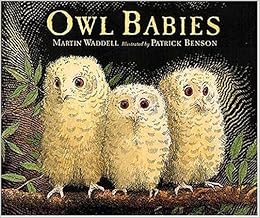
Owl Babies by Martin Waddell. This is my ABSOLUTE FAVORITE book to do for this theme.  I love screaming/crying/whining Bill's line of "I WANT MY MOMMY!" - which happens often enough, that by the end of the book, the kids are doing it too.  


This is one of the newer books we've added to this theme.  It's a cute book about an owl that stays up during the day and gets to see all sorts of colors he doesn't normally.  This past year was the first year that we really used it, and I don't really remember the response.


Ok.  I might have lied.  This one is at least tied for my favorite for this theme.  I LOVE doing the temper tantrum that Baby Owl does at the end of the book.  The kids all laugh and it's super-cute.


Good-Night, Owl by Pat Hutchins.  This is one that I like to do with older kids, assigning them different noises to make during the story.  This *sometimes* works with younger kids - esp. our in-house story times where the parents will do it.


I actually have a fingerplay for this one!

5 Little Hoot Owls
(which is confusing because it starts with one)

1 little hoot owl looking at you, 
1 flew up, and then there were 2
Hoot, hoot, hoot, what a scaaary sight
Hoot, hoot, hoot on Halloween night*

2 little hoot owls high in a tree, 
1 flew up, and then there were 3
Hoot, hoot, hoot, what a scaaaary sight
Hoot, hoot, hoot on Halloween night

3 little hoot owls on a barn door, 
1 flew up, and then there were 4
Hoot, hoot, hoot, what a scaaary sight
Hoot, hoot, hoot on Halloween night

4 little hoot owls by a beehive, 
1 flew up, and then there were 5
Hoot, hoot, hoot, what a scaaaary sight
Hoot, hoot, hoot, on Halloween night

5 little hoot owls sleeping all day, 
along came a cat, and scared them away!
Hoot, hoot, hoot, what a scaaary sight
Hoot, hoot, hoot on Halloween night.

*I have recently started changing this to Hoot, hoot, hoot on such a dark night because I've had quite a few families who don't celebrate Halloween and I've tried to not alienate them as much as possible.

There is a tune I use for this little fingerplay, but it's not the one traditionally used with it, and I have no idea how to write that out for you, and I am NOT recording myself doing it - at least not yet.  It doesn't have to be sung.

Monday, August 10, 2015

Fall Leaves

You can't do fall story times without talking about the fall leaves.  Here's a selection of the books that are our favorites:


Leaf Man by Lois Ehlert. This book has fantastic illustrations made using real leaves, and encourages children to use their imaginations to see the different animals in the pictures.  Sometimes they have a hard time telling what they are, but for the most part, they're spot-on and they love it.

I Know It's Autumn by Eileen Spinelli. This book covers all the things that make fall special besides the leaves changing color.  I like to read it to my Florida children because they don't have these experiences, since autumn doesn't exist in FL.


Fall Leaves Fall! by Zoe Hall.  A good simple book about the changing of the seasons.  My favorite part is that it shows the leaves of different trees


Footballs and Falling Leaves: A Fall Counting Book by Rebecca Fjelland Davis. The book counts fall items, up to ten, and has a rhyme on each page.  The back has a section that shows different clusters of the items and the children have to count them.  A lot of times, they remember the number from earlier in the book and just shout that out, and then we count it together.


Oliver Finds His Way by Phyllis Root. A little bear gets lost in the woods while chasing a leaf. This book can lose a younger child's attention at times, but I always get them back when I have them roar with me.  Also - I cry when Oliver does and that quiets them down in a hurry.


Apples

Come Fall we always have the same themes that we do every year: apples, leaves, owls, pumpkins, and then Halloween.  Here is our apple-themed story time:

The Apple Pie that Papa Baked by Lauren Thompson.  In case you can't tell from the title, it's like the House that Jack Built.  Really cute, but I found I kinda need to do motions to keep the kids with me.


Ten Red Apples by Pat Hutchins.  Good counting book, but it can get a little long for kids.  As long as you ask them plenty of questions about the animals, have them make the sounds, and count along, they stay engaged.


Tap the Magic Tree by Christie Matheson.  Oh. My. Goodness.  For small children?  This book is magic.  They love blowing and tapping the book.  And in large groups?  We have them count along and tap the floor or mime tapping the tree with me.


Apple Farmer Annie by Monica Wellington. A good, simple book about an apple farmer that harvests her apples, makes recipes with them, and sells them at the farmers' market.  It has recipes in the back, which we've used for a kids' cooking program before.  


All for Pie, Pie for All by David Martin. It's a little long for my preschool story time, but I *have* used it before.  My coworker usually uses it for her elementary aged children, as well as Tucker's Apple-Dandy Day by Susan Winget.


The final one I'll mention is The Apple Pie Tree by Zoe Hall. It's great because it has a bit of fact in with the book, talking about the seasons and the cycle of the tree.


When we do our story times, we're doing good to do 3 books and a couple of songs or fingerplays.  I don't have any fingerplays ready to post for this theme.  If I can find ones we really like, or normally do, I'll post them.  For now, most of these themes will just feature books.